Blogger Widgets

Coming Soon to San Antonio’s Southtown: White Elephant Coffee

White Elephant Coffee Presa San Antonio
The site of the forthcoming White Elephant Coffee Company roastery and coffee bar in Southtown.
Forget the Alamo. One of the coolest places in all of Texas is Southtown, San Antonio, composed of a series of largely tourist-free and neighborhoods just south of downtown. Southtown is real San Antonio, and it also may be the city’s most under-discovered dining hubs, featuring creative farm-to-table restaurants, a new wave of craft bars and some of the world’s best Tex-Mex.
(related: San Antonio’s Local Coffee to Open in Pearl Brewery Development)
Now Jose Carlos de la Colina, a native of Brownsville, is hoping to increase the culinary cache by creating one of the area’s first roasteries and craft coffee bars, White Elephant Coffee Company. De la Colina tells Daily Coffee News that the city does have some existing options for good coffee, but he says there is plenty of room for “a new coffee company to set up roots and have a strong presence.”
The White Elephant logo
At the time of this writing, De la Colina was setting up shop with a Probat P12 12-kilo roaster in a flex-use industrial building at 1415 S. Presa St. in the heart of Southtown. For now, he plans to begin roasting, selling coffees online and building wholesale relationships locally. By later this fall, De la Colina says he plans to install a Slayer-made espresso machine and open a bar on-site.
(related: San Antonio Restaurateur Andrew Weissman to Revamp His Coffee Project)
“There has been an influx of people and new businesses in Southtown,” says De la Colina. “Our goal is to establish a strong presence in San Antonio for the highest quality coffee and introduce our name to the great people all over the coffee world.”
De la Colina says he decided to walk away from his career as a financial advisor in part because of his insatiable curiosity for all things coffee — specifically, all the steps from the farm to the cup that are required to maintain quality. While the current growth plan is step-by-step, De la Colina says he can envision multiple White Elephant retail outposts in the future, yet not so many that cup quality would be sacrificed

Inside Velo Coffee Roasters: Growing Specialty Coffee in Chattanooga

velo coffee roasters
Bikes and brews at Velo Coffee Roasters in Chattanooga
Why is specialty coffee exciting right now? It’s not just that there are people doing some really creative and innovative things in medium- and smaller-sized markets throughout the United States, it’s that consumer interest has grown enough to support them.
One great example is with Velo Coffee Roasters in Chattanooga, Tenn. Launched four years ago as a micro roastery with bike delivery service, Velo is now on the precipice of some big changes, thanks in no small part to $37,000-plus in Kickstarter funding to pay for much of a new roaster.
We recently asked Velo founder Andrew Gage and brand manager John Fentress about the company’s organic growth, and how the company is poised to help shape coffee in Tennessee’s fourth largest city.

Can you explain the need for the Kickstarter?

JOHN: Yes, we’re going to buy a 15 kilo cast-iron Joper. Right now we’re using a US Roaster Corp. 5 kilo., so the new roaster will allow us to triple our output, though that won’t be something we pursue immediately. The new roaster will allow us to maintain current output, increase quality, and mend the frayed edges — this will be more on the side of morale than anything — caused by maximizing output and time on the small roaster. The new machine will also allow us to increase quality, being that it is cast iron rather than stainless, and has an integrated computer profiling and analytics system. So before we crank out more wholesale orders, we’ll be working on bettering our product.

How did you get into coffee roasting and what made you take the leap to start your own roastery?

ANDREW: I worked in shops around Chattanooga, and at one point was made head roaster at a shop/roaster. This was invaluable as a learning opportunity, but it was also the impetus to start Velo. In many ways, I viewed starting my own roastery as the best way for me and my family to stay in the city we love, and to simultaneously develop as a roaster and coffee professional.
Andrew Gage of Velo Coffee Roasters

Obviously, you’ve seen some growth in Chattanooga. Has most of your business been wholesale and how would you characterize your own growth over the past four years.

JOHN: We’ve done most business as a wholesaler so far. We have accounts with groceries and shops in town, but we’ve always had some form of retail outlet. However, our efforts have recently been refocused towards expanding hours and making our retail space into a full service brew bar featuring espresso and single cup brew methods. Beyond that, we’ve got a fledgling of a bike shop under our wing, and when that gets to the point of being sustainable, we’ll roll that out under it’s own moniker, letting it and the communities around it grow into themselves more.

How will this purchase and installation affect Velo’s physical spaces?

JOHN: The roaster is positioned immediately inside of the main entrance to the space, across from the brew bar. The space we roast in currently is large enough to accommodate the new machine, so that wont change. The space we’re in is about 1,500 square feet, and that will probably be the next thing we’ll max out. trying to fit a roaster, retail space, and bike shop in 1,500 square feet can be done, but it takes patience and planning.
ANDREW: We really enjoy having the roaster in plain sight of customers. Over the last four years we’ve taken every opportunity we can to create educational experiences, and we’ve seen incredible returns from it. We attempt to be as transparent as possible.

What is your approach to roasting, speaking technically and/or philosophically? What are you hoping to get out of each roast? And what have you learned over the years to help you get there?

ANDREW: We simply try to gently coax the best out of each coffee we carry. Instead of imparting each coffee with an indiscriminant “signature” roast style, we do our best to listen to what each unique coffee has to say. This is simple, but much different than the way I was taught to think about coffee as I was coming up in the industry. Lucky for me, I’m still “coming up” in coffee and I still have a lot to learn.
When it comes to the mechanics of a roast, my approach has evolved, but our simple philosophy has remained the same. Generally speaking, I have learned better how to use momentum and energy created in one phase of a roast to affect another phase. By the time we approach the first crack we like to have enough momentum to carry us through the finish with a very gentle heat application. We are constantly experimenting with development time within and around the first crack. Moving from our current stainless steel drum 5k to a cast iron 15k will undoubtedly present a big learning curve, but that’s partly what I’m in coffee for: The challenge.
John Fentress behind the Velo bar

Can you tell me about your future retail plans?

JOHN: We currently have a retail space. However, we expanded the hours only recently from eight per week to 20. For three years we were only open Friday and Saturday, but the way things are going with Chattanooga, we realized we needed to build our face-to-face presence more, rather than let ourselves stay represented as a bag on the shelf of the grocery. Not that we don’t think that’s valuable, but we saw it becoming a limitation.

What does the menu look like and what do you brew with?

JOHN: We try to keep a laser focus when it comes to making the menu. We pair coffee with the brew method we feel represents it best. Currently we offer Kalita, Clever, Aeropress, and Fetco. We also have a menu of cold brew options: iced coffee, latte, coffee soda, and a rotating specialty drink. Coffees change with season, so when we get a new one, we experiment to find it’s place on the menu. When it comes to espresso, we have one house espresso blend, and we’re developing a second. In the past we have offered espresso, but we sold our machine to fund a Fetco water tower and EK 43.
We figured rather than do both sides of coffee at a lower quality than we felt we should, we’d focus on one side. For our purposes, single cup, manual brew was the side we chose. However, the plan is to bring back espresso. Since we want to be able to grow and modify our space based on sales and attendance, we’re going with a Modbar. We’ll start with a single group and steam wand, and continue from there. Right now, we are knee-deep in espresso grinder research.

La Colombe Secures $28.5 Million Investment, Plans Coastal Expansion

la colombe investment $28.5 million
Photo courtesy of La Colombe
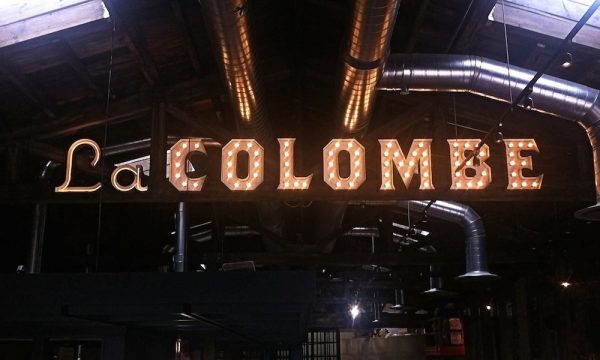
Philadelphia-based roaster and retailer La Colombe has signed a deal for approximately $28.5 million worth of private investments, with plans to open upwards of 100 new cafes in major U.S. cities over the next five years.
Todd Carmichael, who founded La Colombe in 1993 with his friend and business partner JP Iberti, said the deal was signed Aug. 31, on his 51st birthday, following months of contact with investors. “Thank God I never have to do that again,” Carmichael told Daily Coffee News by phone today. “It was like the Brewers Cup with guys in suits.”
The investment comes as La Colombe is putting the finishing touches on its most ambitious facility to date, a coffee headquarters, lab, bakery and distillery that Carmichael said may open late next week in Philly’s Fishtown.
“We’ve gotten to the 20-year mark,” Carmichael said of La Colombe. “JP and I, we kind of work in five year shifts, where we say, ‘What are we going to do for the next five years?’ This time we wondered if we should take it easy or step on the gas, and we did the latter.”
Carmichael said seven new leases for retail locations have already been signed, most of which are in markets in which La Colombe already operates, including Philadelphia, Washington D.C., Chicago and New York, but the company is also looking at moving into Boston, Baltimore, and parts of the West coast.
“We’ve found some great locations focused in our area but we’re always shopping,” Carmichael said. “I really respect what is going on in California. Having the ability to be involved in New York, Chicago and L.A. — I’d love to be in those communities.”
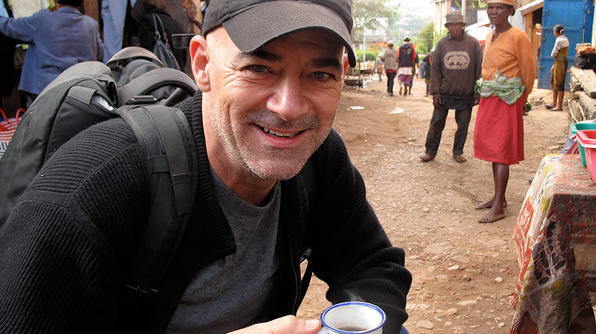
Carmichael on the set of "Dangerous Grounds"
Carmichael on the set of “Dangerous Grounds”
The company could also make some moves in the Northwest. “It’s kind of like the Odyssey,” Carmichael said. “No huge voyage is complete without the main character going home. So there’s always this idea that I’d like to go back and open a couple cafes in Seattle. I learned to roast in the Bay area in Oakland, and in San Francisco, but I really became a coffee man in Seattle. I’m always looking West because there’s something romantic in that.”
It is difficult Carmichael has much time for romanticism these days. In addition to the running the distillery and the Fishtown opening, the star of the Travel Channel’s “Dangerous Grounds” still has three more episodes to film in season three; he’s just decided to compete again in the U.S. Brewers Cup; and he’s just released his own brewing device, The Dragon.
“It’s been a busy year,” he said.
It’s about to be a busy five years, although Carmichael suggests that La Colombe’s two-decade pattern of slow growth have built it to the point that it can absorb such a hefty investment.
“For me, the rule of thumb was always, I never sold a share, ever,” Carmichael says. “It was me and JP, 50/50, and all the money we put right back into the company. You need the company to get big enough that it can really help itself.”

After 17 Years of Note-Taking, Cuvee Coffee Opens Stunning First Bar in Austin

After years of building Cuvee Coffee into a leading Texas specialty coffee roastery, founder Mike McKim was experiencing what he describes as “kind of a career funk.”
“I was, for lack of a better word, bored with the specialty coffee industry. I felt like things were a little stagnant, and I wasn’t sure what to do about that,” McKim, who founded Cuvee as a part-time endeavor in 1998 before growing the business in Texas and beyond, recently told Daily Coffee News.
To fight the funk, McKim made a list of brands, entrepreneurs and creative thinkers he’d come to respect — all of whom were outside the coffee industry — asking each one to chat over a couple of coffee. “That whole process got me fired up,” says McKim. “It got my long-term vision more focused.”
(related: The Pattern of Coffee and People at Houndstooth Dallas)
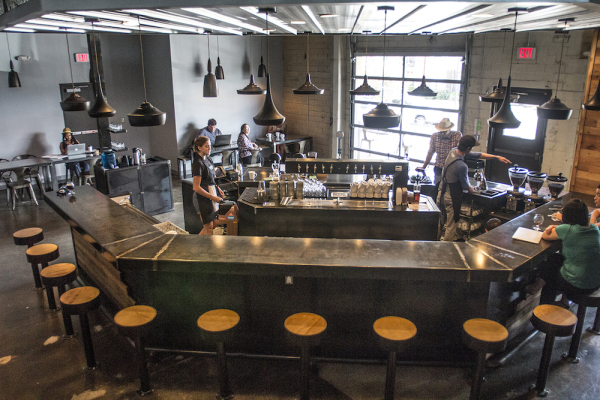
A big part of that vision is Cuvee’s first retail bar, recently opened at 2000 E. 6th Street in Austin, which not only has helped reinvigorate Cuvee’s owner, it may also prove to be a model for future coffee bar design.
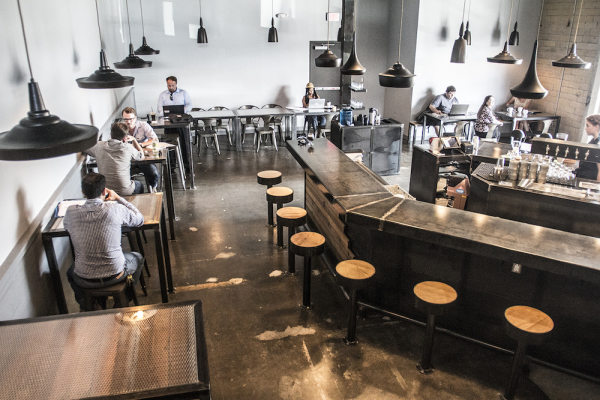
“I think everyone really wants a new, exciting experience, and I think we actually nailed that here,” McKim says of the shop, which occupies a previously unoccupied industrial building, placing as much emphasis on craft beer and wine as it does on Cuvee’s coffee.
Shop - 19
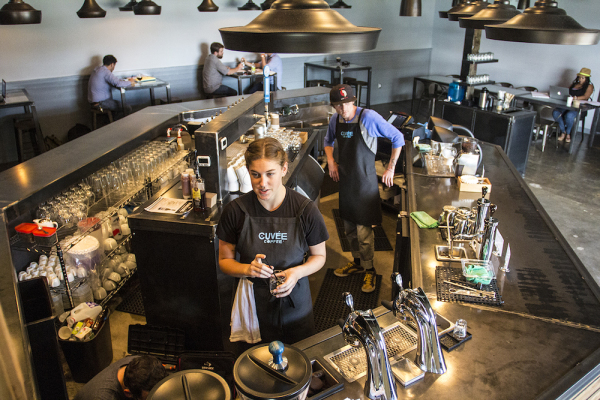
For the customer, that experience begins with the bar, a visually striking, wood-paneled centerpiece with six sides, each serving a distinct purpose. McKim says he wanted to break away from the traditional order flow, instead borrowing inspiration from quick-service food restaurants like Chipotle. Within two steps of the front door, customers reach the first station, where they select a cup size and choose from a rotating selection espressos, then they are led by baristas to the steaming station, where they can selects milk styles. From there, if the order is complete, they walk further down the bar to the POS station. Similarly, customers ordering coffee begin with a cup size selection then proceed to the brew bar, followed by the POS station.
(related: Radio Coffee & Beer Hoping to Make Waves in ‘New South Austin’)
With a relatively low top and partially hidden equipment through the use of a Modbar system and Curtis Seraphim brewers — even the grinders were given their own lower counter space to minimize their profile — the bar gives direct sight lines to the work of the baristas, encouraging interaction. But foremost is a constant sense of movement from walking in the front door to the payment.
“It creates separation, so when you’re waiting for a drink to be made, there’s a constant flow,” McKim says. “There’s this feeling that your making progress because you’re moving somewhere at each step.”
Shop - 11
Inside, Cuvee attempted to maintain the feel of the industrial space, while a trusted group of contractors added endless touches of steelwork and woodwork. “Everytime I go in there, I see some new little detail I hadn’t noticed before,” McKee says.
One of the goals was to not have the space degenerate into what McKee referred to as the “stereotypical coffee bar where it’s just 30 people sitting there with their laptops open.” To that end, the Cuvee staff is not shying away from volume, constantly playing music, maintaining chatter at the central bar and letting the abundant flat, hard surfaces do the rest of the work.
(related: Inside Intelligentsia’s New ‘Contemporary Nordic’ Wicker Park Bar)
Likewise, McKee hopes the space will stay lively through sales from the row of craft beer taps and wines. “One of the things I’m really proud of is creating a space where daytime coffee or night time beer can exist without it being weird,” he says. “I think we really nailed that. It doesn’t feel disjointed. It’s the same space no matter what time of day.”
Shop - 20
If nothing else, the shop is an ambitious and creative first foray into retail after 17 years of roasting for wholesale accounts. On a personal level, the shop has been an eye-opener for McKim, making him acutely aware of the daily and unending hardships of his wholesale partners. “It’s easy for us to sit in the office and say ‘Why can’t so and so place their orders on time?’ Then you open a shop and realize they have 20 other vendors they’re dealing with. Coffee is only a small part of a whole moving mechanism.”
Asked when the world can expect a second, third or fourth Cuvee retail location, McKee says, “I have some goals. I think some of them are realistic and attainable, while others may be unrealistic and dumb. So, we’ll see. I think slow, steady and controlled makes a lot of sense.”
But you can believe he’s taking notes. “Before I started roasting, I was an espresso machine guy and I would go to all these places and take notes on what I liked and didn’t like, and what I would do differently if I had my own chance.”
The Cuvee bar. All photos

2014/15 Global Coffee Production Estimates: A Region-by-Region Breakdown

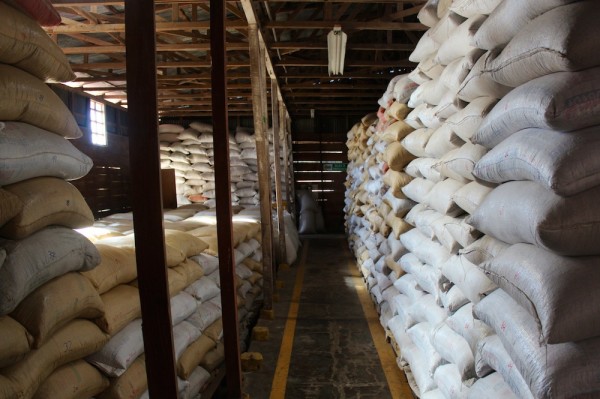
Green coffee in bags. Photo courtesy of the LEAF Project.
The United States Department of Agriculture has released its latest estimates for annual global coffee production, predicting a 1.5 million total drop to 147.8 million bags in 2014/15, despite rising demand.
The USDA’s semiannual announcement is a major speculative force, and the downward estimate is likely to increase uncertainty what has already been a highly volatile market based on unclear data. That said, the global production total has only been revised downward by 400,000 bags since the USDA’s previous estimates in December.
Of course, much of the decline is attributed to weather factors in Brazil, where the harvest is currently underway, although slight rebounds in Colombia, Central America and Mexico due to leaf rust (la roya) response are helping improve global inventory to meet record-high exports and demand. Following is a region-by-region breakdown of some of the main points from the report:

Brazil

  • Brazil’s Arabica output is forecast to drop a second consecutive year to 33.1 million bags, breaking the biennial cycle for the first time in over two decades.
  • The combined Arabica and Robusta harvest is forecast at 49.5 million bags, down 4.2 million from last year.
  • Prolonged drought as well as high temperatures in Minas Gerais and Sao Paulo (about 80 percent of Arabica production) adversely affected the filling and development of beans.
  • Parana’s Arabica output is forecast 800,000 bags lower following extensive tree removal due to last year’s frost damage.
  • The Robusta harvest is forecast at a record 16.4 million bags as output rebounds 2.1 million from last year’s weather related shortfall in Espirito Santo.
  • Consumption remains flat after two decades of steady expansion.

Vietnam

  • Vietnam’s production is forecast at a record 29.3 million bags, up 1 percent.
  • Exports are forecast 2 million bags higher to a record 27.0 million, reversing the recent inventory buildup.

Colombia

  • Colombia’s production is forecast up 1.0 million bags to 12.0 million on higher yields.
  • Continued growth is expected following 7 years of below-average output due to the spread of coffee rust and coffee cherry borers.
  • The rust initially affected as much as 40 percent of the planted area, but has since declined to less than 10 percent following an aggressive tree renovation program.
  • Exports are forecast to gain 300,000 bags to 10.5 million on increased shipments to the United States and Europe.

Central America and Mexico

  • After two years of declining output caused by coffee rust, the region is forecast to increase 870,000 bags to 16.2 million.
  • Honduras is expected to add 400,000 bags to 5.0 million as rust-resistant trees from recently renovated land reach maturity.
  • Guatemala is forecast to rebound 200,000 bags to 3.6 million on improving yields.
  • El Salvador, where production plunged 60 percent last year, is forecast to rebound 175,000 bags to 675,000 as more growers implement control measures.
  • Approximately 40 percent of Central America and Mexico exports are destined for the United States, followed by 35 percent to Europe.

Indonesia

  • Indonesia’s production is forecast to drop 600,000 bags to 8.9 million. For the second consecutive year, excessive rain during cherry development lowered yields.
  • Exports are forecast to decline 600,000 bags to 5.4 million on less available supplies.

India

  • India’s production is forecast to add 100,000 bags to 5.1 million on higher Robusta output in Karnataka, the largest coffee producing state.
  • Arabica is forecast modestly lower as it enters the off-year of the biennial production cycle. Bean exports are forecast unchanged at 3.7 million.
In addition to production estimates, the USDA also released some import estimates for the European Union and the United States, which represent the top two importing regions in the world, respectively:

European Union

  • The European Union accounts for nearly half of the world’s bean imports and is forecast to increase 500,000 bags to a record 46.0 million.
  • Top suppliers include Brazil (29 percent), Vietnam (24 percent) and Indonesia (6 percent).
  • Ending stocks are forecast to remain at 10.5 million bags after trending lower over the last decade.

The United States

  • The United States imports the second-largest amount of coffee beans and is forecast to increase slightly to a record 25.0 million bags as consumption continues to rise.
  • Top suppliers include Brazil (25 percent), Vietnam (18 percent) and Colombia (13 percent).
  • Ending stocks are forecast unchanged at 5.7 million bags.

Mondelez and D.E. Master Blenders Combine to Create Global Super Giant

de master blenders and mondelez merger
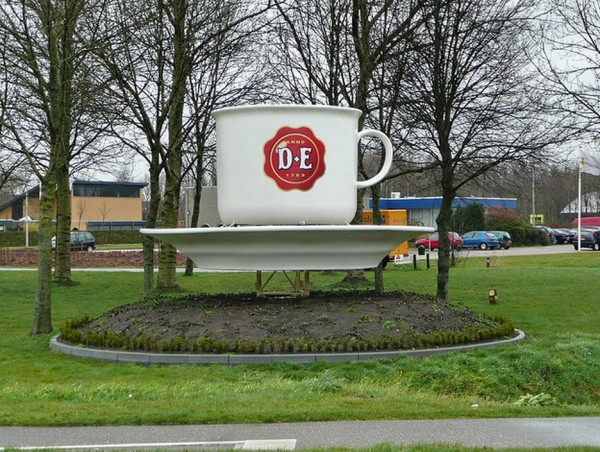
The Douwe Egberts headquarters in Amsterdam. Creative Commons photo.
The world’s second and third largest coffee companies, Mondelez International and D.E. Master Blenders 1753, are combining forces under the name Jacobs Douwe Egberts, with hopes of challenging Nestle as the world’s biggest coffee seller.
According to Euromonitor International estimates, the two companies combined sales hold approximately 17 percent of the world’s coffee market, and they say the merger will result in combined revenues of more than $7 billion. The companies trail only Nestle, which holds about 23 percent of the market, in global sales. The combined company will be based in The Netherlands.
Under the Jacobs Douwe Egberts name, the companies expect growth in the more than two dozen countries in which they currently operate, with brands such as Jacobs, Carte Noire, Gevalia, Kenco, Tassimo and Millicano (from Mondelez International), and Douwe Egberts, L’OR, Pilao and Senseo (from D.E Master Blenders).
Deerfield, Ill.-based Mondelez International, which spun off from Sara Lee two years ago and owns major U.S. snack brands —including Chips Ahoy, Dentyne, Halls, Ritz, Philadelphia Cream Cheese and Oreo — will receive approximately $5 billion cash and a 49 percent share in the new company. The company’s coffee segment has been a leader for its growth since 2010, in large part because of the growth of its single-serve brewing unit, Tassimo.
D.E. Master Blenders, which spun off from Sara Lee in 2012, was acquired by the German investment firm Joh. A Bensiker (JAB) last year. JAB also acquired Caribou Coffee and Peet’s Coffee & Tea in 2012.
The leadership team for the combined company will be named at a later date, and the transaction will be carried out throughout this year and next.

Big UK Coffee Brand Cafédirect Acquires Subscription Service Kopi

Cafedirect coffee logo UKIn a move that recalls last month’s acquisition of Tonx by Blue Bottle Coffee, one of the UK’s largest coffee companies, Cafédirect, has acquired one of the UK’s largest coffee subsription services, Kopi.
“Much speculation has been made over the future of e-commerce subscription models, where customers pay a monthly fee to receive a regular, curated product through the post,” Kopi announced today, saying the deal “provides further evidence that these groundbreaking companies will continue to partner with bigger retail brands in order to scale their customer base.”
In the deal, 23-year-old Cafédirect will acquire Kopi’s subscription software, as well as its list of existing subscribers. Cafédirect, which was a pioneer in bringing Fairtrade-certified coffees to the U.K., will begin operating the subscription service June 1, and Kopi will be rebranded later in the year.
It’s a big deal for Kopi, which says it broke even in mid-2013 and only had one small round of funding since its founding in Cambridge, England, two-and-a-half years ago. Says Kopi co-founder Philip Wilkinson, “We’ve always known the coffee subscription sector needed a big, respected brand to drive awareness.”
The acquisition gives Cafédirect a built-in platform for the emerging subscription market segment, as well as branding opportunities through access to the Kopi subscriber base. The company says it may develop some roasts specific to the subscription service.
“This acquisition creates an opportunity to get closer to our customers, further closing the gap between grower and drinker,” says Cafédirect CEO John Steel. “And for our Kopi subscribers we can develop small batches of premium, bespoke coffees we could not sell in the supermarket.”

Government-Appointed Watchdog Group to Look Into Kenya Coffee Sector

competition authority of kenya
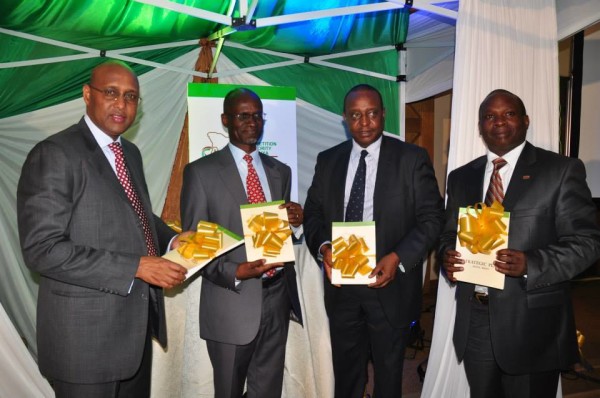
Competition Authority members at the launch of the group’s 2013-2017 strategic plan. Facebook photo by CAT.
A government-appointed watchdog group in Kenya says it is looking into allegations of unethical and illegal trading in the coffee sector. It is the latest in a complicated series of political maneuvers that began with this past season’s milling centralization in the county of Nyeri.
The Competition Authority of Kenya, which was created in 2010 during constitutional revisions that gave the country’s Minister of Finance rule-making authority, said in public letters last week that it intends to “get the evidence and prosecute whoever is involved” in practices that violate national and international trade laws, according to multiple local reports from local sources including Standard Digital and The Daily Nation.
The group says it plans to look into allegations levied by Governors in Nyeri, Kiambu, Murang’a, Kirinyaga and Meru who say that cartels are violating trade laws through marketing collusion and extortion. In public letters, the group also instructed those very governors not to establish any new trade models that may also negatively affect the coffee trade.
Nyeri Gov. Nderitu Gachagua made waves this past season when he ordered that all coffees in the county be processed at a central mill in Sagana. He said the one-time-only mandate was a response to a small number of cartels that were controlling the coffee trade, resulting in approximately 30 percent losses at local mills and a “hostage” situation among aging smallholder farmers.
In April, Gachagua told Daily Coffee News that Governors in the five counties were moving forward with an oversight plan that would require price verification for all coffee sold, although the government would assist in facilitating direct relationships with individual mills and farmers.
The move angered many buyers who missed opportunities from this past harvest, and many have been skeptical of any government-led oversight plan in Nyeri and beyond.

CLR Roasters Goes Fully Vertical with Plantation Acquisition in Nicaragua

CLR Coffee Roasters Miami logo
Miami-based CLR Roasters has acquired a 450-acre coffee plantation and processing facility near Matagalpa, Nicaragua, which along with another contracted 450-acre plantation nearby will make the company’s operations completely vertical.
CLR is a subsidiary of Youngevity International, which controls more than 20 brands in the nutritional and lifestyle markets. The company says the acquisition of the new plantation will allow CLR to “be able to control the coffee production process from harvest to cup.”
“Our processing facility has the capacity to allow us to handle over 30 million pounds of green coffee and we expect to use this capacity to launch a green coffee sales and distribution platform within CLR Roasters,” Youngevity CFO and President of Commercial Development Dave Briskie said in an announcement yesterday.
CLR says both plantations produce shade-grown Rainforest Alliance-certified and Fair Trade-certified coffees. The day-to-day operations of the plantations and processing facility will be overseen by the Siles Plantation Family Group, with which the company inked a five-year deal on the first plantation last year.
Youngevity says some 800 workers will be involved in the planations and processing facility, and through its Be The Change Foundation, the company plans to set up a school and day care center to support the approximately 160 families who live and work on the plantation.
“We are very proud to acquire this Rainforest Alliance-certified farm, which we expect will allow us to grow our coffee business and take our Company to new heights,” Ernesto Aguila, President of CLR Roasters, said in yesterday’s announcement. “We are confident that this investment should strengthen our capacity to better control quality, improve yields, reduce costs and establish CLR Roasters as a premiere source for exceptional high-quality coffee.”
Financing for the project was provided by Youngevity’s cash reserves, along with common stock up to 1 million shares from the personal holdings of CEO Steve Wallach.
CLR currently maintains supply deals with the hospitality and grocery industries with brands including Cafe La Rica and Javalution, as well as other wholesale and private-label accounts.

ACE Sets Cup of Excellence Online Auction Dates for Central America and Mexico Coffees

It is a busy time of year for the team Alliance for Coffee Excellence team, organizers of the Cup of Excellence program that identifies and facilitates the sale of premium coffees from approximately a dozen coffee-producing countries.
An international group of ACE-appointed cuppers recently traveled to farms throughout Central America and Mexico, naming 149 Cup of Excellence-winning coffees and 14 Presidential Award-winning coffees, those that scored over 90 points.
“These amazing farmers have once again surprised us with their innovative approach to producing fabulous coffees even as many of them have struggled with the devastating rust outbreak,” ACE executive director and Cup of Excellence co-founder Susie Spindler said last week, as ACE prepared auctions for the program winners.
A live auction for Nicaraguan coffees wrapped up last Thursday, but upcoming online auctions — all at 9 a.m. U.S. Eastern Standard time — include:
  • El Salvador — June 9
  • Honduras — June 18
  • Costa Rica — June 24
  • Guatemala — July 2
  • Mexico — July 9

World Coffee Research to Lead Groundbreaking Alliance Against Leaf Rust

wcr la roya leaf rust central america
Photo courtesy of Keurig Green Mountain.
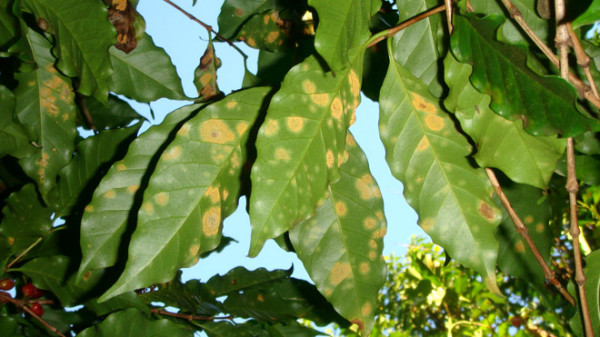
Texas A&M-based World Coffee Research and the Obama administration today unveiled one the world’s most ambitious and collaborative responses to leaf rust (la roya) to date, a nearly $5 million Global Development Alliance initiative to assist smallholder farmers and the entire Central American coffee market.
Part of the United States Agency for International Development’s (USAID) Feed the Future project, the initiative will be led by WCR, which is partnering with development institutions in Costa Rica, Honduras, Guatemala, Panama, Dominican Republic and Jamaica (PROMECAFE), and the Tropical Agricultural Research and Higher Education Center (CATIE).
While the project will directly benefit smallholders throughout Central America, the Caribbean and Peru, the impact is likely to spread throughout the coffee growing world by creating a public/private model for a pipeline of pest-resistant, higher-yielding and higher-quality varieties, while also monitoring market factors to determine the long-term viability of smallholder farming.
“By partnering with innovators from College Station to Colombia, we can promote broad-based economic growth for the world’s most vulnerable people,” USAID Administrator Rajiv Shah said today. “Fighting epidemics like coffee rust empower entrepreneurs and create sustainable livelihoods for families – helping entire communities become self-sufficient.”
WCR Executive Director Tim Schilling says the GDA is in response to the “double whammy” of leaf rust and price volatility that have hurt Central American producers since the disease outbreak in 2012. Project partner PROMECAFE says production is currently down 20 percent throughout Central America from 2011.
“Central America must shoot for the higher end of the market and this GDA will allow that to happen by providing high quality, rust resistant varieties tailored for specific eco-geographic zones,” Schilling said.
In addition to the research and field work in Central America, two post-doctorate coffee biotechnologists will be working in College Station under the direction of Martin Dickman in the College of Agricultural Life Sciences, and “bio-control” research will be carried out at the Federal University of Viçosa in Brazil and Kew Gardens in London.
“This multi-stakeholder initiative creates essential linkages between industry, research institutions and NGOs to provide coffee farming families with more tools and greater capacity to confront a growing number of threats to their coffee and their livelihoods,” said Lindsey Bolger, a WCR Chairperson and vice president of coffee sourcing at Keurig Green Mountain. “By engaging with WCR, coffee roasting companies like Keurig Green Mountain can leverage their interest in ensuring a long-term supply of high quality coffee while helping to address the immediate needs of coffee producing families and communities.”
WCR has outlined five priorities for the project, all of which respond to the idea that Central America should be “a major supplier of top drawer coffees for the most discriminating and lucrative markets.” They are:
  • Assist producers in making the best investment decisions in varietals for plantation renovation.
  • Assist the private and public sectors in multiplying the best varietals and in making them available to producers.
  • Track this coffee production trend data, including socio-economic variables for producers, and provide a comprehensive analysis of the viability of smallholder farming in Central America.
  • Create a pipeline of readily available, high-quality, pest-resistant genetic material to advance the best varieties to farmer evaluation and eventual commercialization.
  • Support a multi-stakeholder effort to create a high-tech breeding program to provide the highest level of quality-tailored, adapted, climate resilient, and pest resistant ‘breeding’ blocks.