Blogger Widgets

The Story Of Coffee


The Story Of Coffee

The global spread of coffee growing and drinking began in the Horn of Africa, where, according to legend, coffee trees originated in the Ethiopian province of Kaffa. It is recorded that the fruit of the plant, known as coffee cherries, was eaten by slaves taken from present day Sudan into Yemen and Arabia through the great port of its day, Mocha. Coffee was certainly being cultivated in Yemen by the 15th century and probably much earlier. In an attempt to prevent its cultivation elsewhere, the Arabs imposed a ban on the export of fertile coffee beans, a restriction that was eventually circumvented in 1616 by the Dutch, who brought live coffee plants back to the Netherlands to be grown in greenhouses.

Initially, the authorities in Yemen actively encouraged coffee drinking. The first coffeehouses or kaveh kanes opened in Mecca and quickly spread throughout the Arab world, thriving as places where chess was played, gossip was exchanged and singing, dancing and music were enjoyed. Nothing quite like this had existed before: a place where social and business life could be conducted in comfortable surroundings and where - for the price of a cup of coffee - anyone could venture. Perhaps predictably, the Arabian coffeehouse soon became a centre of political activity and was suppressed. Over the next few decades coffee and coffeehouses were banned numerous times but kept reappearing until eventually an acceptable way out was found when a tax was introduced on both.
 By the late 1600’s the Dutch were growing coffee at Malabar in India and in 1699 took some plants to Batavia in Java, in what is now Indonesia. Within a few years the Dutch colonies had become the main suppliers of coffee to Europe, where coffee had first been brought by Venetian traders in 1615. This was a period when the two other globally significant hot beverages also appeared in Europe. Hot chocolate was the first, brought by the Spanish from the Americas to Spain in 1528; and tea, which was first sold in Europe in 1610. At first coffee was mainly sold by lemonade vendors and was believed to have medicinal qualities. The first European coffeehouse opened in Venice in 1683, with the most famous, Caffe Florian in Piazza San Marco, opening in 1720. It is still open for business today. The largest insurance market in the world, Lloyd's of London, began life as a coffeehouse. It was started in 1688 by Edward Lloyd, who prepared lists of the ships that his customers had insured.
The first literary reference to coffee being drunk in North America is from 1668 and, soon after, coffee houses were established in New York, Philadelphia, Boston and other towns. The Boston Tea Party Of 1773 was planned in a coffee house, the Green Dragon. Both the New York Stock Exchange and the Bank of New York started in coffeehouses in what is today known as Wall Street.
In 1720 a French naval officer named Gabriel Mathieu de Clieu, while on leave in Paris from his post in Martinique, acquired a coffee tree with the intention of taking it with him on the return voyage. With the plant secured in a glass case on deck to keep it warm and prevent damage from salt water, the journey proved eventful. As recorded in de Clieu's own journal, the ship was threatened by Tunisian pirates. There was a violent storm, during which the plant had to be tied down. A jealous fellow officer tried to sabotage the plant, resulting in a branch being torn off. When the ship was becalmed and drinking water rationed, De Clieu ensured the plant’s survival by giving it most of his precious water. Finally, the ship arrived in Martinique and the coffee tree was re-planted at Preebear. It grew, and multiplied, and by 1726 the first harvest was ready. It is recorded that, by 1777, there were between 18 and 19 million coffee trees on Martinique, and the model for a new cash crop that could be grown in the New World was in place.
But it was the Dutch who first started the spread of the coffee plant in Central and South America, where today it reigns supreme as the main continental cash crop. Coffee first arrived in the Dutch colony of Surinam in 1718, to be followed by plantations in French Guyana and the first of many in Brazil in the state of Pará. In 1730 the British introduced coffee to Jamaica, where today the most famous and expensive coffee in the world is grown in the Blue Mountains.
The 17th and 18th centuries saw the establishment across Brazil of vast sugar plantations or fazendas, owned by the country’s elite. As sugar prices weakened in the 1820’s, capital and labour migrated to the southeast in response to the expansion of coffee growing in the Paraiba Valley, where it had been introduced in 1774. By the beginning of the 1830’s Brazil was the world’s largest producer with some 600,000 bags a year, followed by Cuba, Java and Haiti, each with annual production of 350 to 450,000 bags. World production amounted to some 2.5 million bags per year.
The rapid expansion of production in Brazil and Java, among others, caused a significant decline in world prices. These bottomed out in the late 1840’s, from which point a strong upward movement occurred, reaching its peak in the 1890’s. During this latter period, due mainly to a lack of inland transport and manpower, Brazilian expansion slowed considerably. Meanwhile, the upward movement of prices encouraged the growth of coffee cultivation in other producing regions in the Americas such as Guatemala, Mexico, El Salvador and Colombia.
In Colombia, where coffee had been introduced by the Jesuits as early as 1723, civil strife and the inaccessibility of the best coffee-growing regions had hampered the growth of a coffee industry. Following the “Thousand Days War” of 1899 to 1903, the new peace saw Colombians turn to coffee as their salvation. While larger plantations, or haciendas, dominated the upper Magdalena river regions of Cundinamarca and Tolima, determined peasants staked new claims in the mountainous regions to the west, in Antioquia and Caldas. New railways, relying on coffee for profit, allowed more coffee to be grown and transported. The opening of the Panama Canal in 1914 permitted exports from Colombia’s previously unreachable Pacific coast, with the port of Buenaventura assuming increasing importance.
In 1905 Colombia exported five hundred thousand bags of coffee; by 1915 exports had doubled. While Brazil desperately tried to control its overproduction, Colombian coffee became increasingly popular with American and European consumers. In 1914 Brazil supplied three-quarters of U.S. imports with 5.6 million bags, but by 1919 that figure had fallen to 4.3 million, while Colombia’s share had risen from 687,000 to 915,000 bags. During the same period Central American exports to the U.S. had risen from 302,000 to 1.2 million bags.
In spite of political turmoil, social upheaval and economic vicissitude, the 20th century saw an essentially continuous rise in demand for coffee. U.S. consumption continued to grow reaching a peak in 1946, when annual per capita consumption was 19.8 pounds, twice the figure in 1900. Especially during periods of high global prices, this steadily increasing demand lead to an expansion in production throughout the coffee-growing regions of the world. With the process of decolonisation that began in the years following the Second World War, many newly independent nations in Africa, notably Uganda, Kenya, Rwanda and Burundi, found themselves in varying degrees dependent on coffee export revenue.
For US coffee drinkers, the country’s wettest city, Seattle, has become synonymous with a new type of café culture, which, from its birth in the 1970s, swept the continent, dramatically improving the general quality of the beverage. This new found 'evangelism' for coffee has spread to the rest of the world, even to countries with great coffee traditions of their own, such as Italy, Germany, and Scandinavia, adding new converts to the pleasures of good coffee. Today it is possible to find good coffee in every major city of the world, from London to Sydney to Tokyo; we are drinking more and, more importantly, better coffee.
The importance of coffee to the world economy cannot be overstated. It is one of the most valuable primary products in world trade, in many years second in value only to oil as a source of foreign exchange to producing countries. Its cultivation, processing, trading, transportation and marketing provide employment for hundreds of millions of people worldwide. Coffee is crucial to the economies and politics of many developing countries; for many of the world's Least Developed Countries, exports of coffee account for more than 50 percent of their foreign exchange earnings. Coffee is a traded commodity on major futures and commodity exchanges, most importantly in London and New York.

Coffee History - P4


Coffee History Chronology


As early as the 6th century, Arabs and Abyssinians were aware of the stimulating effects of coffee. Abyssinians supposedly crushed the fruit and ate the peels while the Arabs made tea from the dried skin and pulp. Certainly at any time after the 6th century individuals may have roasted coffee for beverage preparation but there is no written record of roasted coffee until about the 13th century when word got around that coffee seeds had an intriguing aroma when burnt.

In a way, Mohammed (570 – 632 AD) set the stage for the popularity of tea and coffee when he discouraged the use of all alcoholic beverages. I imagine tea was in common use, probably in the form of locally grown herbal teas such as mint or chamomile, before caffeinated teas were available from China and India. (Were there taverns before Mohammed that were closed after the ban on alcohol or did they merely change into teahouses?) Often beverage vendors served from street-curb booths or kiosks in market areas. Another connection with Mohammed and coffee would be through the Sufi order some four hundred years later.
879    Arab travelers visiting Canton mention tea in their log.
925     Rhazes (AD850-925), a Persian doctor from Iraq and major figure in the history of medicine. This follower of the practice of Galen and Hippocrates compiled a medical encyclopedia in which he refers to a bean called “bunchum” thought to be coffee. His discussion of its healing properties no doubt led to the belief that coffee was known as a medicine over a thousand years ago.
1037     Avicenna (980-1037) Arabic, Ibn Sina, the father of modern medicine. Interpreted Aristotle in Neoplatonic fashion but was known in the west principally for his contributions to medicine and writings on other sciences. In his encyclopedia of medicines he also comments on the medicinal properties of “bun”.
c.1200    Sufism, a mystical philosophy of Islam arising in the late 10th and early 11th century would eventually discover the stimulating properties of coffee tea. Members of this semi-monastic order emphasized a personal union of the soul with god. The order is well known for its expression in symbolic Persian poetry. (e.g., poets Ferid ed-Din Attar, Hafiz, Jami and Omar Khayyam).
The Dervish, a Sufi order that uses exhaustive whirling dancing and chanting to reach a transcendental state of ecstasy, found coffee tea particularly helpful to bolster stamina during their practice.
1258     Sheik Omar, (disciple of Sheik Schadheli, the legendary founder and patron saint of the port of Mocha) by chance discovers coffee as a beverage while in exile at Ousab in Arabia.
1350     Persians, Egyptians and Turks are making pottery ewers specifically for serving coffee
c.1450     Gemaleddin a Mufti of Aden is supposedly cured of serious illness with coffee.
1453     Turkish law makes it legal for a woman to divorce her husband if he fails to provide her daily family quota of coffee.
1470     Coffee was first known to be used in Medina and Mecca
1500     Roasting and brewing becomes common in Arabia where coffee-tents, coffeehouses and coffee kiosks start springing up wherever people congregate.
1505     Arab traders introduce coffee trees to Ceylon
1510     Coffee being served in Cairo
1511    Khair Bey, a corrupt governor of Mecca bans the use of coffee, The Sultan sends word that coffee is sacred and has him removed from office, woo-hoo!
1517     Coffee in Europe from Arabia via Mediterranean. The practice of taking African slaves begins in Europe. Coffee used in Baghdad and Ormuz.
1517     Ottoman Turks take control of Cairo, Mecca and Medina. Mocha Coffee is now Turkish and will be for the next three hundred years.
1520     Chocolate brought to Europe from Aztec Mexico
1521     Cortes assumes control of Mexico after the destruction of Aztec state Magellan killed in Philippines and Sebastiano del Cano sails on. Manufacture of silk introduced to France
1522     Spanish conquer Guatemala. Pascuel de Andagoya discovers Peru from the area that is now Panama
1529     Siege of Vienna
1530     First coffee house opens in Damascus, Syria
1532     First coffeehouse opens in Aleppo Syria. Sugar cane first cultivated in Brazil
1545     First European botanical garden in Padua
1554     Coffeehouses opened in Constantinople
1559     First Ottoman siege of Vienna, failed (see 1683)
1573     First German sugar refinery. German physician Rauwolf writes about use of coffee in Syria
1578     Levant Trading Co. founded in London for trade w/ Turkey
1579     England Eastland Co. founded for trade w/ Scandinavia. Portuguese merchants set up trading station in Bengal
1580     Italian cooking becomes popular in Europe. Venice imports coffee from Turkey to Italy
1582     Leonhart Rauwolf refers to “Chaube” use in Aleppo. Rauwolf is a physician from Augsburg. He studied in Italy, France and Valencia and Montpellier, from 1573 to 1576 he traveled through the orient (studying herbs?) He is the first European to describe the drink, how it is served and its basic substance the bean.
1584     Banco Rialto founded in Venice
1585     Venetian emissary in Istanbul, Gianfrancesco Morosini reports to the Venetian senate that Turks imbibe in a black water made from the infusion of a bean which the Turks call “cavee”.
1598     Englishman, Anthony Sherley reports Persians drink a certain liquor that they call “coffe”, made from seeds.
1591     Italian doctor and naturalist, Alpino (Prosper Alpinus) botanically describes coffee in “Medicina Egyptorium” He traveled to Egypt in the retinue of the Venetian consul. From his study of plants along the Nile he published “De Plantis Aegypti Liber (Venice 1592) with woodcut illust of coffee. In writings from Cairo, he reports of seeing a “caova” plant in a private garden.
1594     English traders return from overland journey to India and Ceylon. England breaks Portuguese sea trade monopoly with India
1595     Dutch begin colonizing East Indies. The Dutch will become the major player in coffee. See overview at end.
1597     Dutch take Batavia, Java (Jakarta, Indonesia)
1600     English East India Co. founded
1600     Introduction of coffee into India by Baba ud-din a Muslim pilgrim returning from Mecca
1601     Abolition of monopolies in England. Brothels closed in Germany owing to spread of VD
1602     Dutch East India Co. founded in Java
1604    Voyages of English East India Co. to Java, Spice Islands and Agra
1607     Bank of Genoa fails after national bankruptcy in Spain
1608     First checks “cash letter” in use in Netherlands
1609     Founding of The Bank of Amsterdam. Tea from China shipped for first time to Europe by Dutch East India Co.
1609     An English seaman noted that he rested by a “cohoo howse” in the desert near Aden.
1609     The word “coffe” appears in an English newspaper.
1610     Dutch East India Co. introduces the term “share”
1610     Portuguese Pedro Texeira writes of Kavah.
1613     Amsterdam Exchange built
1615     Coffee is introduced to Venice from which it seduces travelers from all Europe. It is popularly known as “The wine of Araby.”
1615     Italian, Pietro della Valle, while in Istanbul, writes to a friend in Rome that there is a drink used in Istanbul that prevents sleep.
1616     William Harvey, English physician, physiologist and professor of anatomy. Discoverer of circulation of blood and the function of the heart as a pump. Published in 1628. Apparently he got to know and appreciate the drink during his student days in Padua where he had been introduced to it by some fellow students from Arabia. This British habitué established the necessary connections to ensure a continued supply after returning to London.
1616     Merchant, Pieter Van der Broecke purchased coffee in Mocha and even brought saplings back to Amsterdam botanical Gardens.
1618     Founding of Dutch West Africa Co.
1621     Dutch West India Co. founded. Beginning of Dutch spice monopoly
1625     Sugar is used for the first time to sweeten coffee in Cairo. Although sugarcane was native to Indonesia it was introduced and thrived in Egypt.
1625     First English settlement on Barbados
1627     Englishman, Sir Thomas Herbert traveled in an ambassadorial suite to Persia, 1627-1630. His report also chronicles the Kaldi goat story of he discovery of coffee
1632     First coffee shop in London
1636     Dutch settle Ceylon, coffee likely found from earlier Arab settlements. Tea appears for first time in Paris.
1640     First European cafe in Venice. Coffee reportedly being served at various English colleges
1643     Coffee becomes popular in Paris
1650     First coffeehouse in England, Oxford. First tea in England.
1652     First London coffee establishment. A Greek named Pasqua Rosee, in collaboration with an Englishman, Daniel Edwards opens a coffee shop “in a shed in the churchyard in St. Michael, Cornhill.
1657     Drinking of chocolate introduced in London. London excise tax on coffee merchants levied at 8 pence per gal. Newspaper advertisement read: coffee served in London near the Old Exchange twice a day, once in the morning and again at three.
1658   After forty years of considering the economic possibilities of the coffee trade, the Dutch begin cultivation in Ceylon.
1660     Café Procope opens in Paris. English duty on coffeehouse is listed as 4 pence per gal.
1660     1.900.000 kilos of Egyptian Mocha (105 of today’s containers) landed in Marseilles. One third for local consumption and the rest consigned to Northern Italy, Switzerland and Northern Europe.
1663     By royal decree all English coffee houses are required to be licensed. Guilds and taxation have caught up to coffee.
1663     First coffee shipment from Yemen to Amsterdam.
1663     Dutch East India Company establishes a branch in Mocha and exports between 80 and 200 tons annually.
1664     First coffeehouse opens in Amsterdam
1664     English export 22 tons from Yemen. 100 tons in 1690 and 600 tons in 1726.
1665     Ottoman peace treaty with France and Austria. Ambassador Kara Mahmud Pasha, sets up elaborate encampment in Vienna including coffee tents which introduced coffee to many in Vienna for the first time. Peace and trade lasted from 1667 to 1683 during which time coffee beans were imported into Vienna.
1668     Coffee replaces beer as New York’s favorite breakfast drink. The same would happen in Germany two years later.
1669     Turkish Ambassador Suleiman Aga brought coffee to the court of Louis XIV.
1670     Coffee is first sold in Boston 103 years before the Boston Tea party.
Coffee used in royal household of Louis XIV
1671     First coffeehouse in Marseilles frequented by merchants
1671     Faustus Naironus Banesius, a Syrian Maronite monk and professor of philosophy, in a tract on coffee recounts a story of the discovery of coffee. It is the most common and still widely told today. It recounts the tale of Kaldi , a goatherd, and his visit to a monastery. The Arab and Turkish versions of this legend are basically the same but no monastery or Christian monks are consulted to explain the odd behavior of his goats. Rather the herdsman follows his animals to the source of the intoxication and discovers coffee. In other versions there are two herdsmen named Sciadli and Aidrus.
1672     Pascal, an Armenian opens coffeehouse in Paris
1675     England’s King Charles II attempts to close 3000 coffee houses referring to them as “Seminaries of Sedition”
1679     First German coffeehouse
1683     First coffeehouse in Vienna, Hof zur Blaun Flasche, “House under the Blue Bottle” Jerzy Franciszek Kulczycki considered a hero by the people of Vienna for his actions at the 1683 Battle of Vienna. According to a popular legend, he opened the first café in the city, using coffee beans left by the retreating Ottoman Turks. His name often rendered in German as Georg Franz Kolschitzky.
1686     An ad in the Frankfurt journal noted that an Italian merchant was selling chocolate, tea and raw coffee beans.
1686     Café Procope opens in Paris
1687     Invention of the box-mill grinder with drawer Also known as the European coffee mill, it was in common use by 1700.
1688     Underwriters meet at Lloyds’s Coffeehouse
1689     London Coffeehouse opens in Boston
1690     Dutch introduced coffee from Arabia to Java. Dutch introduce coffee into Ceylon from Java
1696     The Dutch commander of the Malabar Coast, Adrian Van Ommeren took coffee berries from Cannnore to Batavia.
1696     Lloyd’s News, weekly newspaper first published
First coffeehouse opens in New York. The King’s Arms
1698     Mrs. White’s chocolate house opens in London, will become Tory party HQ
1697     Green Dragon coffeehouse opens in Boston
1700    Coffee introduced to Malabar Coast of India from Aden, Arabia
1702     Asiento Guinea Co founded for slave trade between Africa and America
1706     Dutch growers in Java send hoe first shipment of beans along with seedlings for the Amsterdam botanical museum.
1709     The French start buying coffee in Mocha
1711     First coffee imports to Amsterdam.
1712     A Dutch Lt. Ressons, presents Louis XIV with coffee seedling but it fails to thrive.
1714     Brancas, Mayor of Amsterdam gifts another coffee tree to Louis XIV.
1714-15     On a second French privateeting expedition to Mocha, the ships medical doctor has the opportunity to cure the Sultan of Yemen of a painful ear infection. In gratitude the Sultan presents him with 60 seedlings. The trees are presented to captain Dufresne d’Arsel of the Hunter, a ship owned by the French East India Company and taken to the Island of Bourbon. Forty die on the voyage and of the twenty delivered only one thrives. The surviving tree seeded the island 1726 saw the first export from Bourbon and continued until 1850 when sugar cane production became more lucrative.
1714     Dutch send seedlings to Surinam (Dutch Guyana). Seedlings were smuggled to Cayenne in neighboring French Guyana. By
1722 French Guyana was in the coffee business.
1715     French growing coffee in Haiti
1716     French growing coffee on Bourbon (Reunion)
1717     Coffee introduced into Portuguese Madagascar from Mozambique. Introduced into Bourbon and Mauritius from Arabia by Fougerais Grenier
1718     Dutch introduce coffee cultivation from Java to Surinam, Dutch Guiana
1719     Oriental Trading Co. founded in Vienna
1720     Army Lieutenant to Louis XIV, de Clieux transports coffee seedling to French Martinique, which will eventually supply seed to all South and Central America. In 1730 the first export shipment went to Ireland and Denmark because the French East India Company still held monopoly in France. 1736 the French monopoly ended and 700 tons were shipped to France.
1720     French growing coffee in French Guiana
1720     Caffe Florien opens in Venice
1720     Ostend coffee merchants buying coffee in Yemen
1722     Cayenne introduces coffee from Surinam. Dutch extend cultivation into Sumatra, Celebes, Bali, Timor and Flores
1726     Lloyd’s List published twice weekly in London
1727     Coffee first planted in Brazil
1728     Slave rebellion in Dutch Guiana
1730     English introduce coffee cultivation to Jamaica
1732     Introduced into Jamaica by Sir Nicholas Lawes
Bach’s celebrated Coffee Cantata is published in Leipzig
1740     Dutch introduce the “wet or washed” method of coffee processing
1748     Coffee from Santo Domingo introduced to Cuba
1750     Spanish introduce coffee into Cuba, Puerto Rico and other Carib islands
1750     Coffee cultivation started in Guatemala
1750     Mocha’s golden age of coffee export comes to an end as Dutch coffee from the East Indies and French coffee from the West Indies under cut the price of Yemen coffee.
1752     Brazil steps up coffee cultivation
1753     Linnaeus publishes “Species Plantorum”, coins name “Coffea arabica
1755     Coffee cultivation started in Puerto Rico
1756     First chocolate factory in Germany
1756     Introduction of coffee met with government resistance leading to a short-lived    Swedish ban on coffee drinking.
1760     Coffeehouses common in German cities
1760     Portuguese introduce seedlings to Brazil from Portuguese Goa on the Malabar Coast of India
1760     Slave rebellion in Jamaica
1770     First export of coffee from Cuba
Chicory is first used with coffee in Holland. It is the processed root of Belgian endive.
1770     Portuguese introduce coffee through Rio de Janeiro to start production in Minas Gerais
1774     Catholic missionaries encourage the spread of cultivation around Brazil
1767 or 1777?     Frederick the Great of Prussia tries to block the importation of coffee as an economic protectionist policy when more money was being spent on imported coffee than domestic beer. His tax officers were charged to sniff out contraband beans and came to be known as “coffee smellers”. Another justification went: “Many battles have been fought and won by soldiers nourished on beer and the King does not believe that coffee-drinking soldiers can be depended upon.”
1784     Spanish introduce coffee to Caracas Venezuela, Colombia, Ecuador and Bolivia
1790     Coffee cultivation started in Mexico
1791     Slave revolt in Santo Domingo (Haiti)
1794     Slavery abolished in French colonies
1796     Coffee introduced into Costa Rica
1800     Brazil exporting coffee
1802     France suppresses slave rebellion in Santo Domingo
1807     England prohibits slave trade
1810     Invention of the disk pulper. Drum pulper 1850
1818     Coffee cultivation started in Cordova and Orizaba, Mexico
1825     First cultivation of coffee in Hawaii is introduced from Brazil.
1827     Pumping percolator invented
1829     Slavery abolished in Mexico
1834     Spanish inquisition ended (1478-1834) after 356 years
1840     British increase coffee production in India
1840     Peugeot manufactures coffee mills until 1975
1843     Slave population in Cuba estimated. 436,000
1849     Daumsches Kaffeehaus buys bentwood chairs designed by Frenchman, Michel Thonet. Known for their unique design, weight, strength and of course comfort they will become the style of choice in almost all coffee shops thereafter.
1850     Drum pulper invented. Important for producing washed coffee after abolition.
1852     Coffee introduced into El Salvador from Havana
1861     United States slavery prohibited
1869     Coffee rust epidemic devastates Ceylon coffee.
1879     Coffee plantations flourish in Guatemala, Honduras and Nicaragua
1900     Over production in Brazil causes market crash
Today Coffee grows in about 80 countries around the world and is grown commercially in about half of them. Coffee is now the world’s most popular beverage second to water.
Note, dates are not verified but second hand references should be considered only approximate.
Netherlands enters the coffee fray. 1500 – 1700
With the increasing economic strength of the Netherlands, England and France during the 16th century, the outrageous claim to ownership to half the world, expressly sanctioned by the papacy, came under increasingly heavy attacks from the aspirant nations who were busily engaged in setting up their own capitalistic social orders. They opposed in word and deed the exclusive claims of Spain and Portugal. With advances in naval architecture, the building of bigger and better armed ships, a new “Sport of Kings” (and Queens) commenced, framed by the creation of alliances, signing treaties and conducting wars, sometimes with each other, sometimes against each other. (see Age of Discovery chronology)
Territorial claims abounded, border treaties were signed and breached: plunder and freebooting were everyday occurrences; overseas possessions were seized, exchanged and sold. The one thing all these rulers seemed to have in common was ending monopoly on eastern trade. Surly greed and Empire has nothing to do with it.
By 1600 the example of the Medici were put to the test in Holland. The capitalistic system was taking form in the Netherlands with the formation of new State Banks and the creation of Joint Stock Companies. Holland was the first model capitalist nation in Western Europe. In1602 the Dutch East India Company was founded and in 1621 the Dutch West Indies Company took form. These companies united under one organization previously disparate and rival companies and by means of through and well planned voyages over the worlds seas was able to break the dominance of Spain and Portugal.
Backed by enormous capital invested by shareholders, they managed to set up and maintain bases abroad, gain access to the “Spice Islands” and intimidate the Portuguese. In the year of the founding of the Dutch East India Company (1602) five Dutch ships managed to destroy a small Portuguese fleet off the coast of Java. One year later the neighboring islands of Ternate and Amboina fell to the Dutch. In 1605 the Company inflected its heaviest defeat on the Portuguese in Southeast Asia by capturing the bases on the Moluccas, the gems of the Spice Islands.
In 1614 a delegation of merchants and horticulture specialists visited Aden in order to study how Arabs grew and processed coffee. Two years later a plant was exported to Amsterdam. From this tree seeds would be sent throughout Dutch colonies.
After 1626 with the establishment of the West Indies Company (1621) the Dutch stepped up activities in South America. They were already established in northern Brazil, much to the consternation of the Portuguese. In 1661 they sold these Brazilian possessions to the Portuguese and six years later (1667) exchanged their North American territories (New Amsterdam, (1664) with the British for what would become Dutch Guiana (Surinam). Coffee would not be the main export of Surinam but there is record of some production there in1718.
Meanwhile, in 1658 the Dutch scaled up coffee production in Ceylon with new seed stock from Amsterdam. In 1699 seedlings were transplanted from the much closer, Malabar Coast to start new plantations on Java. In succession, Sumatra, Bali, Timor and Celebes would support new coffee gardens.
It was here in what is now Indonesia that the Dutch improved the way coffee was to be processed. The original method practiced by the Arabs was unsuitable in the more humid tropical climes. The Dutch developed a system of removing the peel of the fruit before drying. This system would be copied around the world and become known as washed coffee or the wet process. In 1810 the disk pulper was invented and in 1850 the drum pulper was invented to further mechanize the wet process. Previously slave labor was expended on manual pulping making the wet process much more expensive.

HISTORY OF COFFEE-P3


HISTORY OF COFFEE


ETHIOPIA
The coffee plant, which was discovered in Ethiopia in the 11th Century, has a white blossom that smells like jasmine and a red, cherry-like fruit. Back then, the leaves of the so-called "magical fruit" were boiled in water and the resulting concoction was thought to have medicinal properties. As the fame of the coffee plant spread to other lands, its centuries-long voyage was about to begin.


YEMEN
Coffee spread quickly through the Arabian Peninsula.  In the mid 14th century, coffee cultivation reached Yemen and for 300 years, it was drunk following the recipe first used in Ethiopia. Yemen's climate and fertile soil offered the ideal conditions for cultivating rich coffee harvests. 

ISTANBUL
Istanbul was introduced to coffee in 1543 during the reign of Sultan Suleiman the Magnificent by Özdemir Pasha, the Ottoman Governor of Yemen, who had grown to love the drink while stationed in that country.  

In the Ottoman palace a new method of drinking coffee was discovered: the beans were roasted over a fire, ground and then boiled in water. With its new brewing method and aroma, coffee's renown soon spread even further afield.


Coffee soon became a vital part of palace cuisine and was very popular in court. The position of Chief Coffee Maker (kahvecibaşı) was added to the roster of court functionaries. The Chief Coffee Maker's duty was to brew the Sultan's or his patron's coffee, and was chosen for his loyalty and ability to keep secrets. The annals of Ottoman History record a number of Chief Coffee Makers who rose through the ranks to become Grand Viziers to the Sultan. 

Coffee soon spread from the palace to grand mansions, and from grand mansions to the homes of the public. The people of Istanbul quickly became enamored with the beverage. Green coffee beans were purchased and then roasted at home on pans. The beans were then ground in mortars and brewed in coffeepots known as "cezve". 

Most of the general public became acquainted with coffee through the establishment of coffeehouses; the first coffeehouse (named Kiva Han) opened in the district of Tahtakale and others rapidly cropped up all over the city. Coffeehouses and coffee culture soon became an integral part of Istanbul social culture; people came here throughout the day to read books and beautiful texts, play chess and backgammon and discuss poetry and literature. 


Thanks to the efforts of merchants and travelers who passed through Istanbul, Turkish Coffee's soon spread to Europe and ultimately to the whole world.


VENICE
Europeans got their first taste of coffee in 1615 when Venetian merchants who had become acquainted with the drink in Istanbul carried it back with them to Venice. At first, the beverage was sold on the street by lemonade vendors, but in 1645 the first coffeehouse opened in Italy. Coffeehouses soon sprang up all over the country and, as in many other lands, they became a platform for people from all walks of life, especially artists and students, to come together and chat.

Travellers who discovered coffee while staying in Istanbul extolled the matchless flavour of the beverage in letters they sent home to Marseilles. In 1644, the first coffee beans, along with the apparatus used to prepare and serve coffee, were brought to Marseilles by Monsieur de la Roque, the French ambassador. 

MARSEILLES
In 1660, merchants from Marseilles who had grown to love the beverage they had first tasted in Istanbul began to import coffee to the city, thus sating Marseilles's growing appetite for coffee. The first coffeehouse opened in Marseilles in 1671. Initially, coffeehouses catered to merchants and travellers, but they soon became popular with people from all walks of life.

PARIS
Paris was introduced to coffee in 1669 by Hoşsohbet Nüktedan Süleyman Ağa, who was sent by Sultan Mehmet IV as ambassador to the court of King Louis XIV of France. Among the Ottoman ambassador's possessions were several sacks of coffee, which he described to the French as a "magical beverage". 

Süleyman Ağa swiftly became the darling of Parisian high society. The Parisian aristocracy saw it as a great honour to be invited to share a cup of Turkish Coffee with Süleyman Ağa, who regaled his guests with his pleasant wit and conversation. The ambassador related countless stories on the subject of coffee, which earned him the sobriquet of Hoşsohbet, or raconteur. 

Paris's first real coffeehouse, Café de Procope, opened in 1686. It soon became a favourite haunt of the literati, a place frequented by renowned poets, playwrights, actors and musicians. Many famous figures such as Rousseau, Diderot and Voltaire became enamoured with coffee at Café de Procope. Following the trend set by Café de Procope, coffeehouses opened on practically every street in the city.


VIENNA
1683 marked the end of the Second Siege of Vienna. As the Turks retreated, they left their extra supplies behind. The abandoned goods included a large number of tents, livestock, grain and around 500 sacks of coffee. The Viennese had no idea what to make of the mysterious contents of the sacks. One Viennese captain claimed that the coffee beans were camel-feed and decided to dump the sacks into the Danube.

News of the mysterious sacks reached a gentleman named Kolschitzky who had lived among the Turks for many years and had served as a spy for the Austrians during the siege. He requested the sacks of coffee, with which he was very familiar, as payment for his successful espionage services during the siege. 

Kolschitzky served small cups of Turkish Coffee to the Viennese, first going door to door, and then in a large tent that he opened to the public. Soon, he had taught the Viennese how to prepare and enjoy the beverage. Thus Vienna became acquainted with coffee.

The Viennese coffeehouses that opened during this period set an example for coffeehouses in many other countries.

LONDON
England first became acquainted with coffee in 1637 when a Turk introduced the drink to Oxford. It quickly became popular among students and teachers who established the "Oxford Coffee Club". 

The first coffeehouse in Oxford opened in 1650 and was called the "Angel". 

In 1652, a Greek named Pasqua Rosée opened the first coffeehouse in London. Using his extensive knowledge of how to prepare and brew Turkish Coffee, he introduced his friends and clients to its peerless taste. 

By 1660, London's coffeehouses had become an integral part of its social culture. The general public dubbed coffee houses "Penny Universities" as they were patronised by writers, artists, poets, lawyers, politicians and philosophers. London's coffeehouses offered customers a great deal more than piping hot cups of coffee: the entrance fee of one penny allowed them to benefit from the intellectual conversation that surrounded them.


HOLLAND
The history of coffee in Holland is markedly different from that of other countries, as for many years the Dutch were more concerned with coffee as a trade commodity than as a beverage. 

Coffee first reached the country via Yemen in the 17th century. The Dutch began cultivating coffee in its colonies. In 1699, coffee beans were planted on the island of Java, thus laying the foundation for Indonesia's coffee plantations. In 1711, the first Javanese coffee beans were sold on the open market in Amsterdam. 

The first coffeehouses in Holland opened in the 1660s. With their unique style that featured rich décor, a warm atmosphere and lush gardens, they stood out from coffeehouses in other countries. Located mainly in the financial districts of Dutch cities, they became known as places where merchants and financiers conducted business meetings. 

In the 1680s, the Dutch introduced coffee to Scandinavia, the region which today has the highest per capita consumption of coffee in the world.

GERMANY
Coffee was introduced to Germany in 1675. The first coffeehouses opened in 1679-1680 in Hamburg, Bremen and Hanover. 

At first, coffee was considered a beverage of the nobility. The middle and lower classes were not introduced to coffee until the early 18th century, and it was only much later that it came to be prepared and consumed at home. 

As coffeehouses were the domain of men, middle class women established their own "coffee clubs".


The oldest coffee house in Europe beside the Parisian “Café Procope” is to be found in Leipzig, Germany.  In 1694 Heinrich Schütze opened the “Coffe Baum” in 4 Kleine Fleischergasse and gave out free coffee.  Over the following three centuries, many notable personages met here and enjoyed the popular drink. Gottsched, Klinger, E. T. A. Hoffmann or Wagner were often seen going in and out. Goethe, Lessing, Bach and Grieg were also known to be guests there. In the Schumann Room situated on the ground floor, Robert Schumann would meet with friends at his regular table between 1828 and 1844. Revolutionaries such as Blum, Liebknecht and Bebel also made “Coffe Baum” their second living-room. In 1990 Helmut Kohl and Lothar de Maizière discussed the possibilities of reunification here.


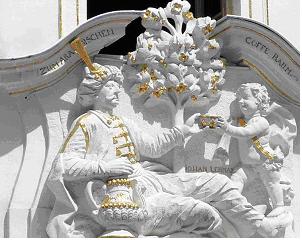
The sandstone sculpture above the doorway to “Coffe Baum” is especially famous. An Ottoman offers cupid a cup of coffee. It symbolises the meeting of the Christian western world with the Islamic East. No other than Augustus the Strong was supposed to have donated this sculpture as way of saying thank you to the landlady, who had taken immaculate care of him.  One of the most important coffee museums’ worldwide is to be found on the third floor. Over 500 chosen exhibits from 300 years of Saxony’s coffee and cultural history are presented over 15 rooms. 

AMERICA
Coffee reached North America in 1668. The first coffeehouse in New York, "The King's Arms", opened in 1696. 

In 1714, the Dutch presented Louis XIV with a coffee sapling from their plantations on Java. The sapling was planted in the royal Jardin des Plantes in Paris. 

In 1723, a French mariner named Gabriel du Clieu took a sapling from the Jardin des Plantes to the island of Martinique. From here, the coffee plant spread to other Caribbean islands, as well as to Central and South America. 

In 1727, a Portuguese sailor named de Mello Palheta carried coffee saplings to Brazil from French Guyana. Today, Brazil is the number one producer of coffee in the world, accounting for 35% of global coffee production. 

In 1730, the British began cultivating coffee in Jamaica. 

By the mid 19th century, coffee had become one of the most important commodities in world trade.

THE HISTORY OF COFFEE-P2

THE HISTORY OF COFFEE

An Energizing Drink Dating Back A Thousand Years

Coffee Beans
A Coffehouse in Palestine (cerca 1900)

The History of Coffee Through the Ages
You may think that the history of coffee is short and was mostly used in modern times. You'd be wrong!
Coffee has a rich and colorful history dating back over a thousand years. Coffee's use and flavor may have changed over it's long history, but it's ability to energize its drinkers remains true even today.
The Energized Shepherd
According to legend, the history of coffee is based on the story of a shepherd named Kaldifrom Caffa Ethiopia.
One day, an Arabian shepherd named Kaldi found his goats dancing joyously around a dark green leafed shrub with bright red cherries in the southern tip of the Arabian Peninsula. It wasn't long before Kaldi determined that it was the bright red cherries on the shrub that were causing the peculiar euphoria in his sheep. Deciding to try these berries himself, he quickly learned of their powerful effect.
The local monks initially scolded the young Kaldi for bringing them this new "drug". But later, the monks realized that if they drank this liquid, they could stay up longer for extended prayers. Eventually, these berries were distributed to other monasteries around the world and coffee was born.
History of Coffee Timeline
Excerpts - UTNE READER, Nov/Dec 94, by Mark Schapiro, "Muddy Waters"
  • Prior to 1000 A.D.: Members of the Galla tribe in Ethiopia notice that they get an energy boost when they eat a certain berry, ground up and mixed with animal fat.
  • 1000 A.D.: Arab traders bring coffee back to their homeland and cultivate the plant for the first time on plantations. They also began to boil the beans, creating a drink they call "qahwa" (literally, that which prevents sleep).
  • 1453: Coffee is introduced to Constantinople by Ottoman Turks. The world's first coffee shop, Kiva Han, open there in 1475. Turkish law makes it legal for a woman to divorce her husband if he fail to provide her with her daily quota of coffee.
  • 1511: Khair Beg, the corrupt governor of Mecca, tries to ban coffee for feat that its influence might foster opposition to his rule. The sultan sends word that coffee is sacred and has the governor executed.
  • 1600: Coffee, introduced to the West by Italian traders, grabs attention in high places. In Italy, Pope Clement VIII is urged by his advisers to consider that favorite drink of the Ottoman Empire part of the infidel threat. However, he decides to "baptize" it instead, making it an acceptable Christian beverage.
  • 1607: Captain John Smith helps to found the colony of Virginia at Jamestown. It's believed that he introduced coffee to North America.
  • 1645: First coffeehouse opens in Italy.
  • 1652: First coffeehouse opens in England. Coffee houses multiply and become such popular forums for learned and not so learned - discussion that they are dubbed "penny universities" (a penny being the price of a cup of coffee).
  • 1668: Coffee replaces beer as New York's City's favorite breakfast drink.
  • 1668: Edward Lloyd's coffeehouse opens in England and is frequented by merchants and maritime insurance agents. Eventually it becomes Lloyd's of London, the best-known insurance company in the world.
  • 1672: First coffeehouse opens in Paris.
  • 1675: The Turkish Army surrounds Vienna. Franz Georg Kolschitzky, a Viennese who had lived in Turkey, slips through the enemy lines to lead relief forces to the city. The fleeing Turks leave behind sacks of "dry black fodder" that Kolschitzky recognizes as coffee. He claims it as his reward and opens central Europe's first coffee house. He also establishes the habit of refining the brew by filtering out the grounds, sweetening it, and adding a dash of milk.
  • 1690: With a coffee plant smuggled out of the Arab port of Mocha, the Dutch become the first to transport and cultivate coffee commercially, in Ceylon and in their East Indian colony - Java, source of the brew's nickname.
  • 1713: The Dutch unwittingly provide Louis XIV of France with a coffee bush whose descendants will produce entire Western coffee industry when in 1723 French naval officer Gabriel Mathieu do Clieu steals a seedling and transports it to Martinique. Within 50 years and official survey records 19 million coffee trees on Martinique. Eventually, 90 percent of the world's coffee spreads from this plant.
  • 1721: First coffee house opens in Berlin.
  • 1727: The Brazilian coffee industry gets its start when Lieutenant colonel Francisco de Melo Palheta is sent by government to arbitrate a border dispute between the French and the Dutch colonies in Guiana. Not only does he settle the dispute, but also strikes up a secret liaison with the wife of French Guiana's governor. Although France guarded its New World coffee plantations to prevent cultivation from spreading, the lady said good-bye to Palheta with a bouquet in which she hid cuttings and fertile seeds of coffee.
  • 1732: Johann Sevastian Bach composes his Kaffee-Kantate. Partly an ode to coffee and partly a stab at the movement in Germany to prevent women from drinking coffee (it was thought to make them sterile), the cantata includes the aria, "Ah! How sweet coffee taste! Lovelier than a thousand kisses, sweeter far than muscatel wine! I must have my coffee."
  • 1773: The Boston Tea Party makes drinking coffee a patriotic duty in America.
  • 1775: Prussia's Frederick the Great tries to block inports of green coffee, as Prussia's wealth is drained. Public outcry changes his mind.
  • 1886: Former wholesale grocer Joel Cheek names his popular coffee blend "Maxwell House," after the hotel in Nashville, TN where it's served.
  • Early 1900's: In Germany, afternoon coffee becomes a standard occasion. The derogatory term "KaffeeKlatsch" is coined to describe women's gossip at these affairs. Since broadened to mean relaxed conversation in general.
  • 1900: Hills Bros. begins packing roast coffee in vacuum tins, spelling the end of the ubiquitous local roasting shops and coffee mills.
  • 1901: The first soluble "instant" coffee is invented by Japanese-American chemist Satori Kato of Chicago.
  • 1903: German coffee importer Ludwig Roselius turn a batch of ruined coffee beans over to researchers, who perfect the process of removing caffeine from the beans without destroying the flavor. He markets it under the brand name "Sanka." Sanka is introduced to the United States in 1923.
  • 1906: George Constant Washington, an English chemist living in Guatemala, notices a powdery condensation forming on the spout of his silver coffee carafe. After experimentation, he creates the first mass-produced instant coffee (his brand is called Red E Coffee).
  • 1920: Prohibition goes into effect in United States. Coffee sales boom.
  • 1938: Having been asked by Brazil to help find a solution to their coffee surpluses, Nestle company invents freeze-dried coffee. Nestle develops Nescafe and introduces it in Switzerland.
  • 1940: The US imports 70 percent of the world coffee crop.
  • 1942: During W.W.II, American soldiers are issued instant Maxwell House coffee in their ration kits. Back home, widespread hoarding leads to coffee rationing.
  • 1946: In Italy, Achilles Gaggia perfects his espresso machine. Cappuccino is named for the resemblance of its color to the robes of the monks of the Capuchin order.
  • 1969: One week before Woodstock the Manson Family murders coffee heiress Abigail Folger as she visits with friend Sharon Tate in the home of filmmaker Roman Polanski.
  • 1971: Starbucks opens its first store in Seattle's Pike Place public market, creating a frenzy over fresh-roasted whole bean coffee.